A fascinating slipper orchid
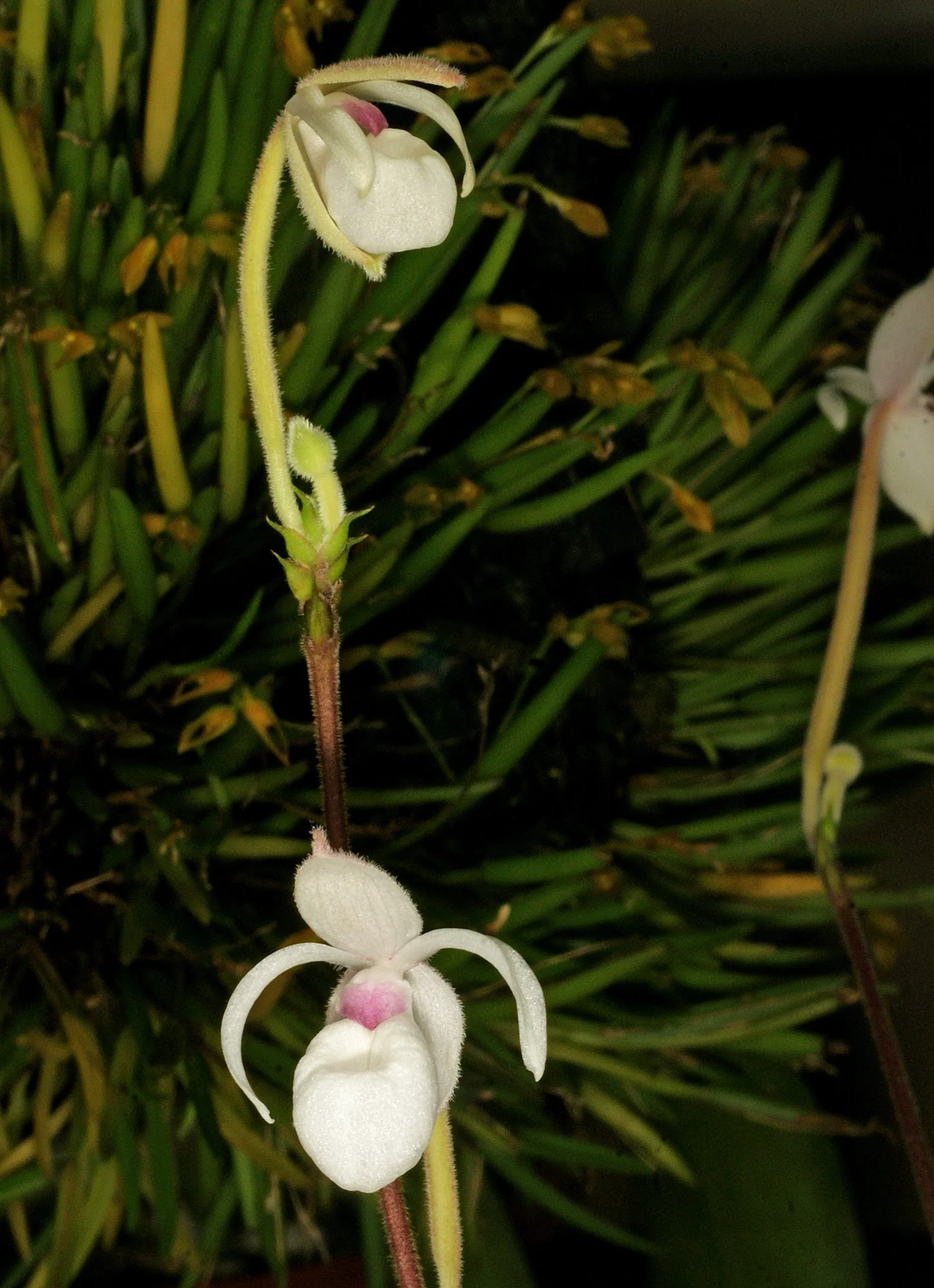
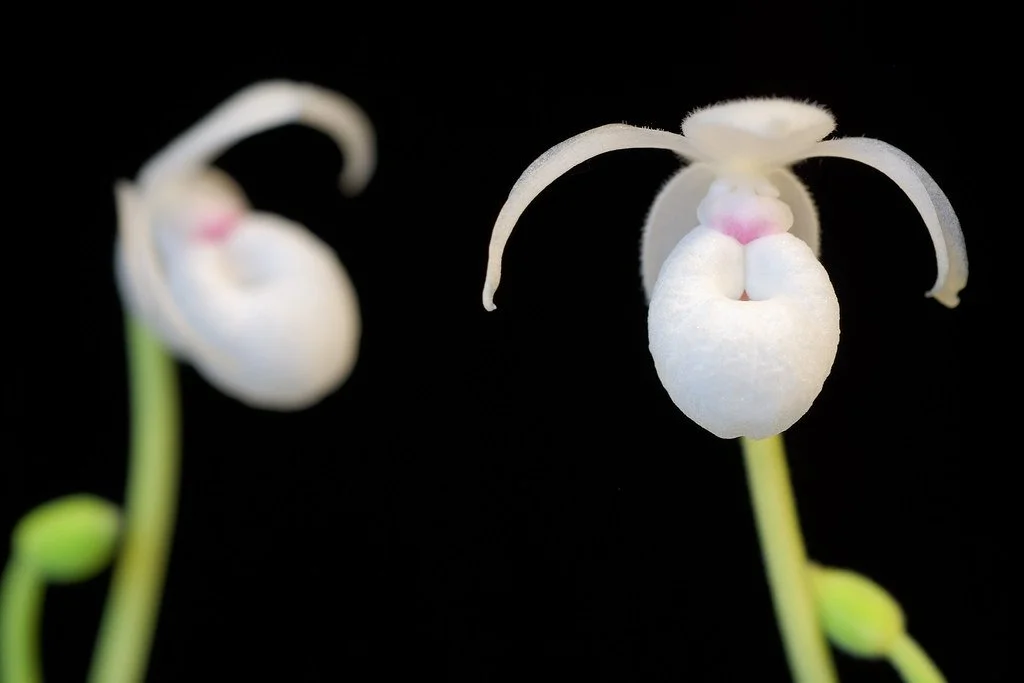
Mexipedium xerophyticum is one of the most unusual and fascinating slipper orchids in cultivation.
Endemic to eastern Oaxaca, Mexico, it grows as a lithophyte on steep, shaded limestone cliffs, typically at elevations around 300 meters. Rainfall is highly seasonal, and water drains away almost immediately, although the species thrives in high humidity. New growths are produced on stolons.
When this species was discovered circa 1990, only a handful of individual plants—reportedly as few as seven—were found in the wild, all confined to a very limited area later expedition revealed that fire had severely damaged the original site, destroying most of the known plants.
However, subsequent surveys located several additional specimens growing nearby, slightly expanding the known population (Pérez-García, 2011). plants form compact fans of stiff, leathery leaves that reflect their xerophytic nature. Flowers are borne singly or in small numbers on short inflorescences and are slipper-shaped. While not large or flamboyant, the blooms are quietly striking, and flowering is always a special event.
One of the most interesting aspects of Mexipedium xerophyticum is its taxonomic position. Although it was originally placed within the genus Phragmipedium, its unusual morphology and later DNA studies showed it to be distinct enough to warrant placement in its own genus.
Mexipedium now stands alongside Paphiopedilum, Cypripedium, Phragmipedium, and Selenipedium within the slipper orchid subfamily Cypripedioideae. Today, Mexipedium xerophyticum remains the sole species in the genus Mexipedium, making it a monotypic genus and a true taxonomic oddball.
I grow my plant in very free-draining media with ample air movement and bright light. It tolerates warmth well but is sensitive to prolonged moisture around the roots. It is not often seen in collections, and its combination of rarity, unique taxonomy, and extreme natural habitat is exactly why this orchid species is so rewarding to grow.
Hennie