NOS member Lyn shares her growing tips for her Orchid of the month winning plant Stenorrhyn chosspeciosum.
I purchased it on the 21.2.2025 from Fame Orchids on a Nambour bus trip to Belmont. It is a terrestrial native to Mexico and Central America. Common names are The Crimson Candles or Spotted Jewel Orchid.
It is very tolerant of a wide range of temperatures, but seems to prefer cool to warm. It thrives in semi-shaded conditions at 1200-3000 metres. It grows in moister areas of deciduous forests or is also considered a cold growing terrestrial with huge fat roots in seasonally dry forests or plains.
It grows in humus or on steep embankments or as an occasional epiphyte. It is considered easy to grow and will do well in a terrestrial mix like peat moss or New Zealand sphagnum moss. Another option is a terrestrial mix of half soil and half small bark and fine perlite in a wide shallow pot (bulb pan).
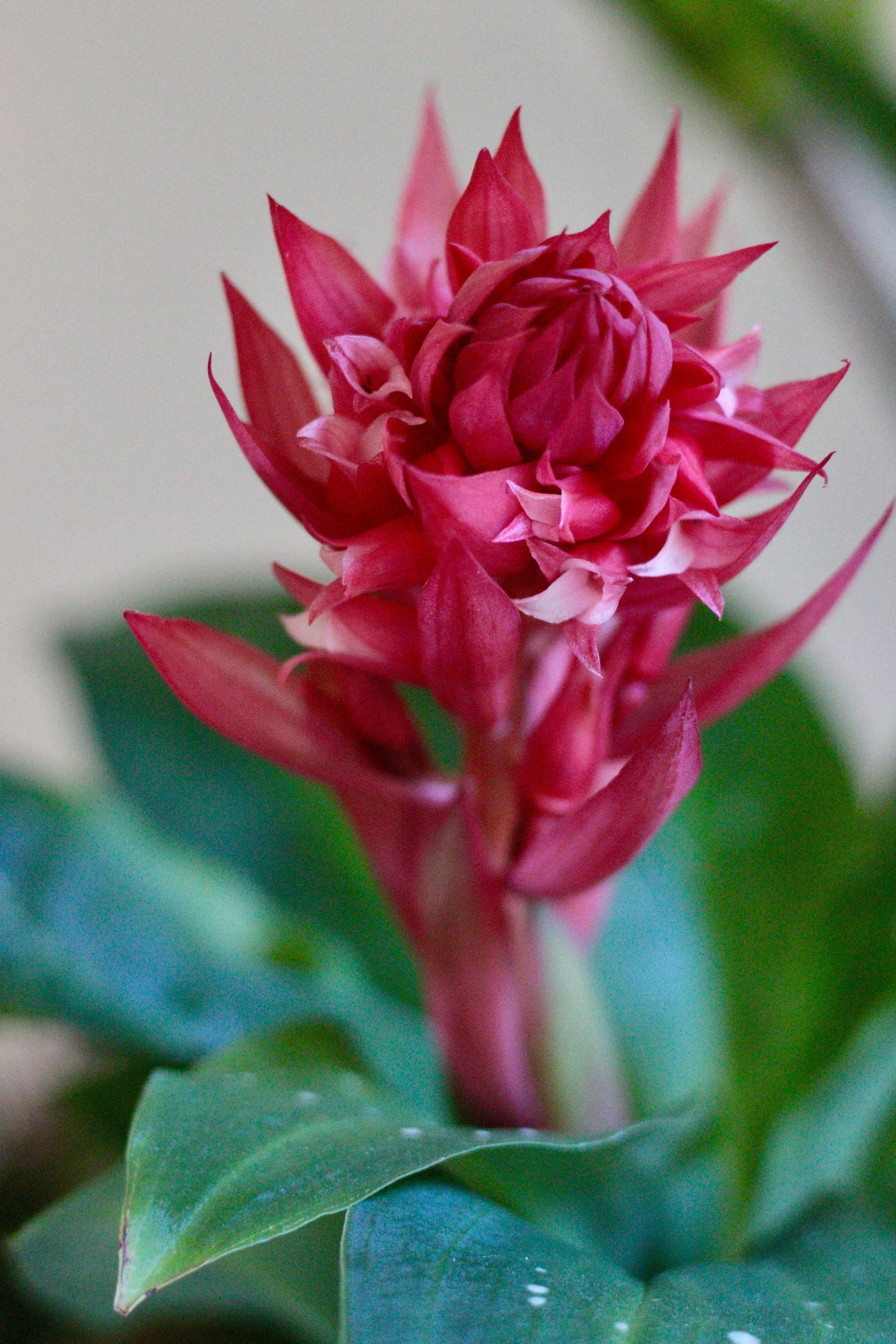
Lynn’s Stenorrhyn chosspeciosum (photo supplied by Lynn)
Flower spikes emerge in winter and can grow into a magnificent specimen with several growths and flower spikes 12-18 inches tall and can remain in bloom for 2-3 months or more.
I did not repot this plant and the original mix seems to be chopped up perlite, coir fibres and some quite small bark and I believe by the feel of the sides of the pot that it is probably full of ‘huge fat roots’ as suggested. I have only used some K-tek pellets as fertilizer and it was quite a small plant when I purchased it, but I do believe it immensely enjoyed the massive amount of rain we have had and bolted ahead with growth and subsequent flowering. Normally it would prefer regular watering and light feed during the growing season and a drier rest period when dormant.
I do believe that it is advisable to give a small amount of moisture to dormant plants so that the bulbs/roots do not desiccate or die off especially if the plant is not in an advanced state of growth.
As our weather has been so overcast and wet interspersed with some fine and quite warm days I think these conditions have provided the ideal conditions for the growth that has occurred.
Countries included in its range are Guiana, Central Guiana, Surinam, Venezuela, Colombia, Ecuador, Peru, Bolivia, Paraguay and Argentina, so a very wide range of habitat. It possibly will still be open for our next meeting if above information is correct.
Lynn